Wednesday, August 19, 2009

Strawberry Gender Decided by Two Genes, Not One


"New research by an Agricultural Research Service (ARS) scientist and her cooperators found gender in strawberries is determined by two genes, not one as previously believed.

Strawberry plants possess one of three reproductive functions. Male plants bear flowers that produce pollen but cannot set fruit. Female plants produce fruit if their flowers are pollinated, but cannot produce their own pollen. Hermaphrodites contain both male and female functions that enable them to flower, self-pollinate and bear fruit. Neuters, which look like male strawberry plants, can also exist but do not posses reproductive functions." Stephanie Yao (ARS)

More »

Source: USDA (ARS) http://www.ars.usda.gov

Looking for effective fertilizers or plant nutrients, please visit our website at www.ferticell.com or call (602)233-2223

Monday, August 3, 2009

ARS Releases New Leaf Lettuce Breeding Lines with Corky Root Resistance


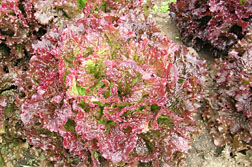
"Three new leaf lettuce breeding lines with resistance to corky root, a serious disease of lettuce, have been released by the Agricultural Research Service (ARS).

Corky root is caused by a bacterium called Sphingomonas suberifaciens. It lives in the soil and attacks the plant's roots, causing them to enlarge and develop yellow to brown lesions and longitudinal cracks, taking on a cork-like appearance.

Once infected, the roots are unable to effectively absorb water and nutrients, resulting in smaller lettuce heads and yield loss. Cultural practices and fumigation techniques used to treat the disease are costly and labor-intensive. Therefore, developing lines with genetic resistance is still the most common and preferred method to combat the disease."Stephanie Yao, Agricultural Research Service (ARS)

More »

Source: USDA (ARS) http://www.ars.usda.gov


Looking for effective fertilizers or plant nutrients, please visit our website at www.ferticell.com or call (602)233-2223
Wednesday, June 24, 2009

Researchers Identify Inhibitor that Controls Fungal Pathogen


"A key bacterial compound that inhibits the growth of the plant pathogen Fusarium verticillioides has been identified by Agricultural Research Service (ARS) scientists. The compound could help protect plants, livestock and poultry from fusarium infection.

The compound is produced by Bacillus mojavensis strain RRC101. Finding better controls for F. verticillioides is important because fumonisin mycotoxins—especially fumonisin B1—are toxic to livestock and poultry." Sharon Durham

More »

Source: Source: USDA (ARS) http://www.ars.usda.gov

Friday, June 19, 2009

Researchers Testing “One-Two Punch” Against Disease-Spreading Thrips


"Spraying tomatoes with kaolin, a type of powdered clay, and one of three plant essential oils cut in half the incidence of tomato spotted wilt disease, which is spread by thrips.


According to Stuart Reitz, an entomologist with the ARS Insect Behavior and Biocontrol Research Unit’s Tallahassee, Fla., site, kaolin forms a white coat that may interfere with thrips’ ability to zero in on color cues during flight. Thrips that do still land on treated plants may find the kaolin coat difficult to penetrate with their juice-sucking mouthparts. This, in turn, may diminish their transmission of the TSW virus, which is present in the insects’ saliva. " Jan Suszkiw


Source: USDA (ARS) http://www.ars.usda.gov/

It Pays to Furrow Dike


"Furrow diking not only saves water, but reduces irrigation costs to a point where it makes economic sense, according to Agricultural Research Service (ARS) scientists.

Furrow diking is a tillage system where soils are plowed into ridge-like barriers running alongside row crops. The ridges hold irrigation and rain water, allowing it to soak into the soil instead of washing away." Dennis O'Brien

More »

Source: USDA (ARS) http://www.ars.usda.gov/

Wednesday, May 20, 2009

Watermelons Tapped for Ethanol


"Agricultural Research Service (ARS) studies in Lane, Okla., have shown that simple sugars in watermelon juice can be made into ethanol. In 2007, growers harvested four billion pounds of watermelon for fresh and cut-fruit markets. Around 800 million pounds--or 20 percent of the total--were left in fields because of external blemishes or deformities.

Now, instead of being plowed under, such melons could get an economic "new lease on life" as ethanol. Normally, this biofuel is produced from cane crops like corn, sorghum or sugarcane as a cleaner-burning alternative to gasoline. The watermelon work reflects a national push by ARS to diversify America's "portfolio" of biofuel crops that can diminish the reliance on petroleum, especially from foreign suppliers." Jan Suszkiw (ARS)

More »

Source: USDA Agricultural Research Service (ARS)